Organise a vocal or guitar session
A schedule is a decision tool
A useful schedule tells you what can wait when one passage needs extra attention. It is not a promise that every attempt will fit or that a performance will be finished at an exact time. Begin by identifying the minimum result you want to keep: a coherent lead vocal, a guitar backing or two specific pieces. Then rank extras by importance. If time becomes limited, that list avoids restarting the discussion from zero. Separate technical preparation, performing and listening; continually switching between them can fragment concentration. In a shared session, nominate one person to consolidate decisions. Several simultaneous opinions make it harder to identify an approved take. The plan in this guide is an example for discussion, not a description of actual equipment, employees or availability. The working format and relevant details are agreed before the assignment is confirmed, and the plan should follow that agreement.
Vocals: the first twenty minutes
For a vocal session lasting up to two hours, an illustrative plan might reserve the first twenty minutes for checking lyrics, backing and entrances. Listen to the opening and one demanding passage to confirm that everyone is using the correct version. Avoid spending this segment performing the whole song when the objective is to identify an entrance or resolve an uncomfortable monitoring balance. Explain listening preferences with concrete words: I need to hear the opening consonant more clearly, or the backing masks my entrance. Use a level representative of the performance; a whispered test does not reveal what will happen in the chorus. If a file or arrangement problem appears, decide whether it can be resolved within the assignment before continuing. Fixing an incorrect reference early is more efficient than discovering it after several takes. This initial time belongs within the session rather than being an automatic additional allowance.
Vocals: complete takes and priorities
The next segment can focus on two complete passes with a brief listen between them. Look for continuity and identify differences that matter: intention, pitch appropriate to the goal, pronunciation and phrase endings. Avoid judging a take only by one isolated word. A performance with a small repairable mistake may be more coherent than a technically clean version lacking direction. Then choose priority passages and record short alternatives with some lead-in and tail preserved. Note which section belongs to each attempt and why it was recorded. If a decision requires comparing too many options, return to the written objective. Doubles, harmonies or arrangement changes should not displace the lead vocal without a conscious agreement. The proposal covers one performer and one song lasting up to six minutes; additional performers or a longer structure require the scope to be considered separately rather than assumed.
Vocals: a break and closing review
Include a short break before final corrections and leave a closing margin to check what will be retained. A pause helps distinguish mechanical repetition from a performance decision, although its length depends on the situation. Do not spend every remaining minute attempting one note without first reviewing the whole song. At the end, listen to joins between passages and check that a chosen phrase does not remove the breath needed for the next. If a question remains, identify the exact point and preferred option. A clean selection of takes does not mean mixing and mastering are included in vocal recording. A quick playback also does not replace checking the delivered file later. Keep closing notes as the basis for future comments and collect corrections into one list, following the two revision rounds provided for the assignment instead of sending scattered contradictory instructions.
Guitar: establish a starting point
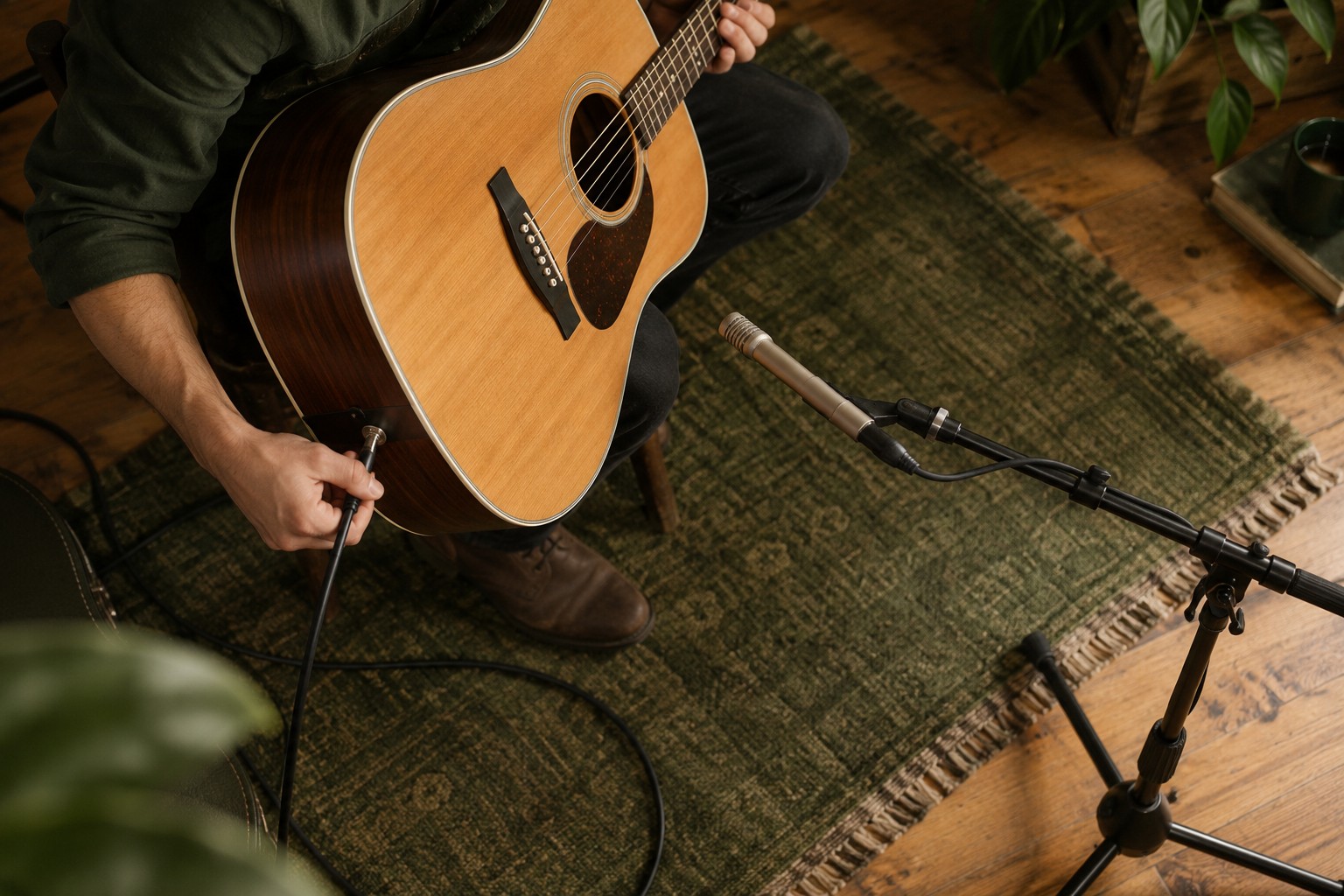
For a guitar session lasting up to three hours, an illustrative allocation could reserve about thirty minutes for checking tuning, structure and performance balance. First decide which piece is more demanding and whether both use the same setup. A capo, alternative tuning or change of intensity can require another check, so group compatible decisions together. Test passages with the strongest attacks as well as those containing silence; they reveal different problems. Avoid continually changing position, instrument and arrangement at the same time. If you change one variable, listen to its effect before introducing another. Useful information is musical: disappearing notes, dominant attacks or a recurring mechanical noise. Do not assume a particular microphone model from illustrative photographs. A specific technical requirement should have been discussed beforehand, rather than becoming a new condition at the start and consuming the time intended for performance.
Guitar: separate pieces and corrections
You can allocate substantial blocks to each piece, with listening and a break between them, leaving the final thirty or forty minutes for corrections and selection. Start with a complete take to preserve the sense of the arrangement. For a short repair, record several bars around the problematic point; inserting only one isolated note may prevent a natural join. If the piece has a flexible pulse, listen to continuity before deciding it should be aligned to a grid. With sustained chords, allow the resonance to finish and avoid moving accessories during the tail. Note the different settings for each piece so takes do not become confused. The 260 euro proposal includes one instrument and up to two pieces lasting six minutes each, with 21 percent VAT and edited takes. It does not automatically include a full mix, an additional band or an unlimited number of versions and exports.
When the plan needs to change
If preparation reveals missing materials, do not compensate by rushing every decision. Explain what can be completed with what is available and what would require another session or a different service. An editing project of up to eight tracks and eight minutes is proposed at 180 euros, while mixing and mastering for one song of up to six minutes and twenty-four tracks is proposed at 360 euros; both amounts include 21 percent VAT. These are defined assignments, not automatic extensions of a recording session. Request a written proposal before adding work. When planning travel in Madrid, use the confirmed time and instructions rather than assuming unrestricted access because you know the company address. If a delay affects the plan, notify the contact by telephone or email. A clear message helps reassess priorities but does not itself create a free extension of reserved time or alter the agreed deliverables.
A closing checklist that prevents confusion
Before finishing, identify the main take, alternative passages, unresolved points and files to be delivered. Check that names distinguish piece and version, and confirm who will approve the review. Keep arrangement decisions and avoid replacing them later with a new demo without explaining the changes. Review how materials will be sent, and do not confuse an anticipated delivery schedule with a guaranteed publication booking. Keep your own copy of everything received. Working materials are retained for six months under the applicable policy; that period does not turn the service into permanent storage. A new booking provides for a 30 percent deposit and cost-free cancellation with seven days of notice under the stated conditions. A good closing record is a short, verifiable list: what is available, what remains missing, who makes the decision, and what happens next. That record helps future feedback refer to the same agreed result.