Acoustic guitar recording with continuity
Attacks, resonance and rhythm: hear the instrument as a performance.
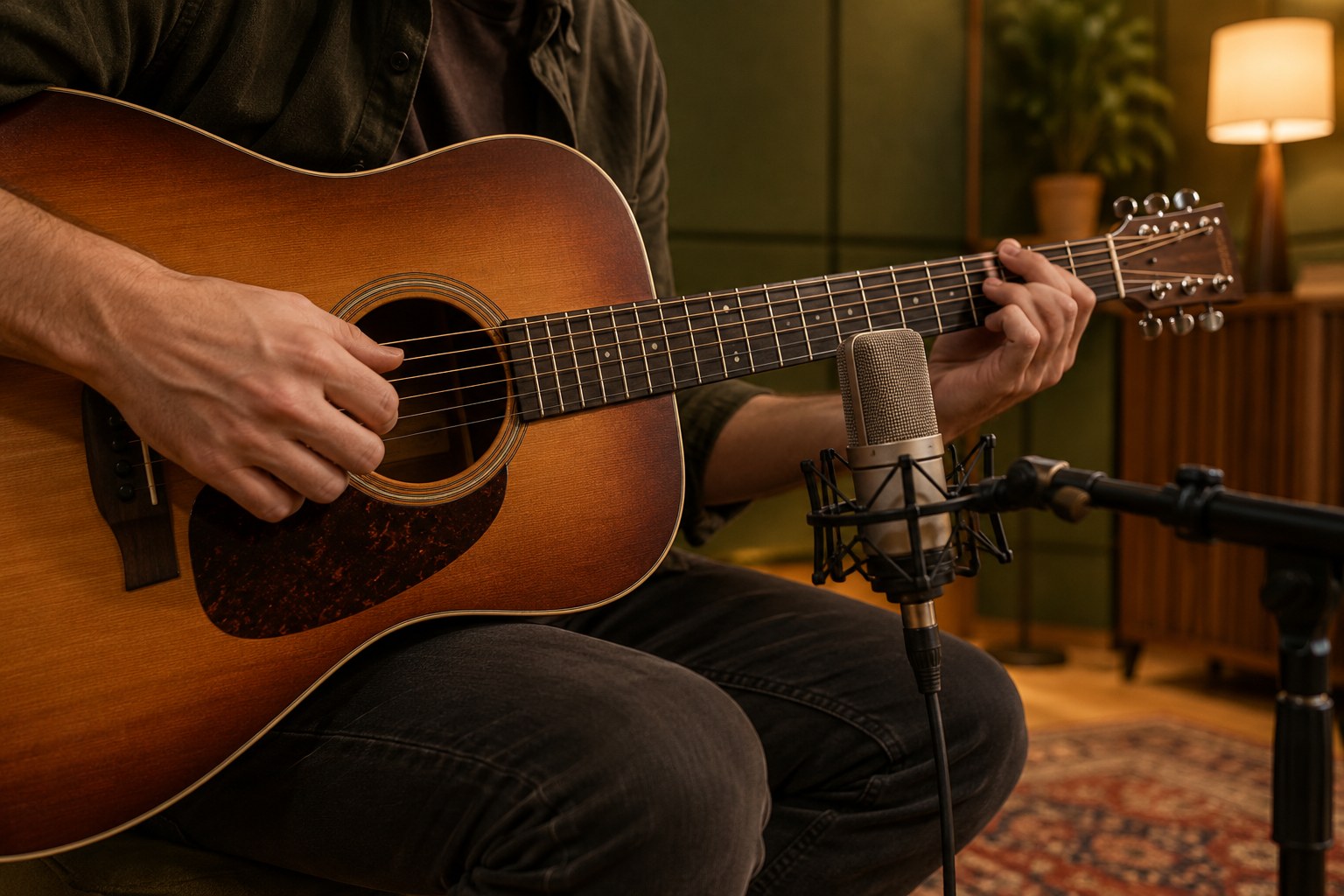
Two pieces, one guitar
An acoustic guitar reveals small decisions that a rushed recording can hide: where a note ends, which string remains open and how the pulse changes between sections. This service allocates up to three hours to one instrument and two pieces lasting up to six minutes each. Its purpose is to capture and edit performances that preserve the relationship between hands, rhythm and resonance. It is not presented as a band production or a completed mix. If a piece includes singing, percussion or several instruments, explain that before confirmation: those elements change the work and are not automatically included in the guitar price.
Identify the pieces
Send lengths, tunings, structure and destination; we choose an appropriate timing reference.
Prepare and record
We review tuning and performance priorities, working on the two pieces within the three hours.
Select and join
Useful takes are assembled with attention to attacks, tails and chord continuity.
Check delivery
You listen to the identified versions and group editing changes into the two included rounds.
Included in the scope
- Up to three hours of acoustic guitar recording.
- One instrument and two pieces of up to six minutes each.
- Review of supplied structure, tunings and references.
- Recorded takes following the agreed musical objective.
- Selection and editing of the captured material.
- Two revision rounds within that scope.
- Agreed final files, without an included complete mix.
| Service | Unit | Before VAT | VAT included |
|---|---|---|---|
| Acoustic guitar recording | per defined session | € 214.88 | € 260.00 |
Preparing the instrument and repertoire
Check tuning, string condition and the stability of the setup you use. Changing strings immediately beforehand can alter the instrument’s behaviour; decide in good time which condition feels comfortable. Bring a list of the two pieces, their lengths and any alternative tunings. If you use a capo, state its position and any changes within the piece. A simple arrangement reference helps locate repetitions and endings without imposing a mechanical performance. Preparation also includes practising difficult transitions: resolving an entrance between chords during rehearsal is usually more effective than trying to rebuild it afterwards through editing. Bring any small playing accessories you personally need.
Choosing free timing or a tempo reference
Not every acoustic piece improves by following a click. An accompaniment that must share timing with other tracks needs a different reference from a solo performance with expressive pauses. Explain where the material is going before making that choice. If further production is planned, supply the tempo, guide or backing with the same starting point. If movement in time is part of the piece, keep a structural reference rather than imposing a grid out of habit. Editing can organise takes, but it does not promise to turn a free performance into a perfectly synchronised arrangement without changing its intentions or natural feel.
Listening to attacks, resonance and silence
During recording, evaluation goes beyond whether every note is present. Balance between strings, the sound of a position change and the length of the final resonance all matter. Some finger sounds belong to the performance; others distract from the passage. That boundary is best agreed through a specific listen rather than a general aim to remove every sound outside the note. Breaks make it possible to notice tuning or repetition problems without unnecessarily tiring the hands. When a passage needs several alternatives, we identify what changed so that selecting a take does not depend on an imprecise memory of the performance.
Editing without changing the instrument’s identity
The edited takes aim for continuity between sections. A join can fail even when the attacks line up, because a chord tail is still sounding or the background changes abruptly. Each transition is therefore checked in context. Selection works with the takes actually recorded; it does not offer unlimited restoration of missing notes. If you want to preserve a complete version for its progression, that preference can matter more than correcting a small timing variation. The two revision rounds allow these decisions to be discussed using specific times. Adding another piece or changing the arrangement afterwards is an extension, rather than an edit to the agreed material.
Cost and planning the three hours
The price is €260 including 21% VAT. The 30% reservation amount equals €78. Written confirmation establishes the date, payment conditions, materials and delivery; this site does not process a purchase. The three hours are distributed according to difficulty, preparation and the priorities of the two pieces. A fixed number of takes is not guaranteed because musical needs vary. For changes or cancellations, review the terms, including the provision for cancellation without charge at seven days in advance and any rights applicable to you. Contact hours do not establish an available recording slot, and the session is only scheduled through a separate written agreement.
Delivered files and the next stage
You receive edited takes of the pieces in the agreed format and organisation. If someone else will continue production, explain beforehand which timing reference and version they need for integration. Keep the file names and check that each piece has its complete ending, particularly when a long resonance remains. The service does not include a full mix or turn the files into a finished release. Requesting an editing adjustment differs from asking for a final sound involving reverb, other sources or distribution processing. The delivery guide helps you review the package; the preparation guide offers a checklist for arriving with essential decisions already resolved.
Questions about this service
Can I bring two different guitars?
The published scope covers one instrument. Changing guitars can require fresh decisions and preparation time. If that difference matters to the pieces, describe it when enquiring; the scope will be confirmed before reservation, without promising that every change fits into the session.
Must I always play to a metronome?
No. The decision depends on the recording’s destination and arrangement. A tempo reference may be necessary when drums or other tracks will be added later. In a free piece, pauses can be part of the performance. We agree the reference before recording, rather than after file delivery.
Are all string noises removed?
We do not promise to remove every noise. Some belong to attacks and transitions, and removing them can damage the recorded instrument. Identify the passages that concern you so natural editing options can be assessed. The aim is a coherent performance, rather than a guitar with every physical trace removed.
Can I add a vocal over the guitar?
Vocal recording is not part of this price. If you need to sing and play simultaneously, explain that beforehand so an appropriate scope can be assessed. The included guitar pieces do not imply an additional vocal session, and edited-take delivery does not include a full mix with other sources.